Guanciale.AI
Product Design, Brand, Frontend
2025
Project Overview
GuanPay is a crypto payments protocol built on Base that lets users buy real-world products without selling their crypto. Instead of converting ETH to cash, users lock collateral in a vault, get spending power on a marketplace, and repay later to unlock their assets. The protocol calls this "stake-to-own."
The core value proposition is simple: spend now, keep your upside. If ETH goes up while your collateral is locked, you still benefit. Traditional crypto purchases mean selling your position and triggering a tax event. GuanPay sidesteps both by turning crypto holdings into a collateral-backed credit line, with the merchant paid instantly in USDC by the protocol.
My Work
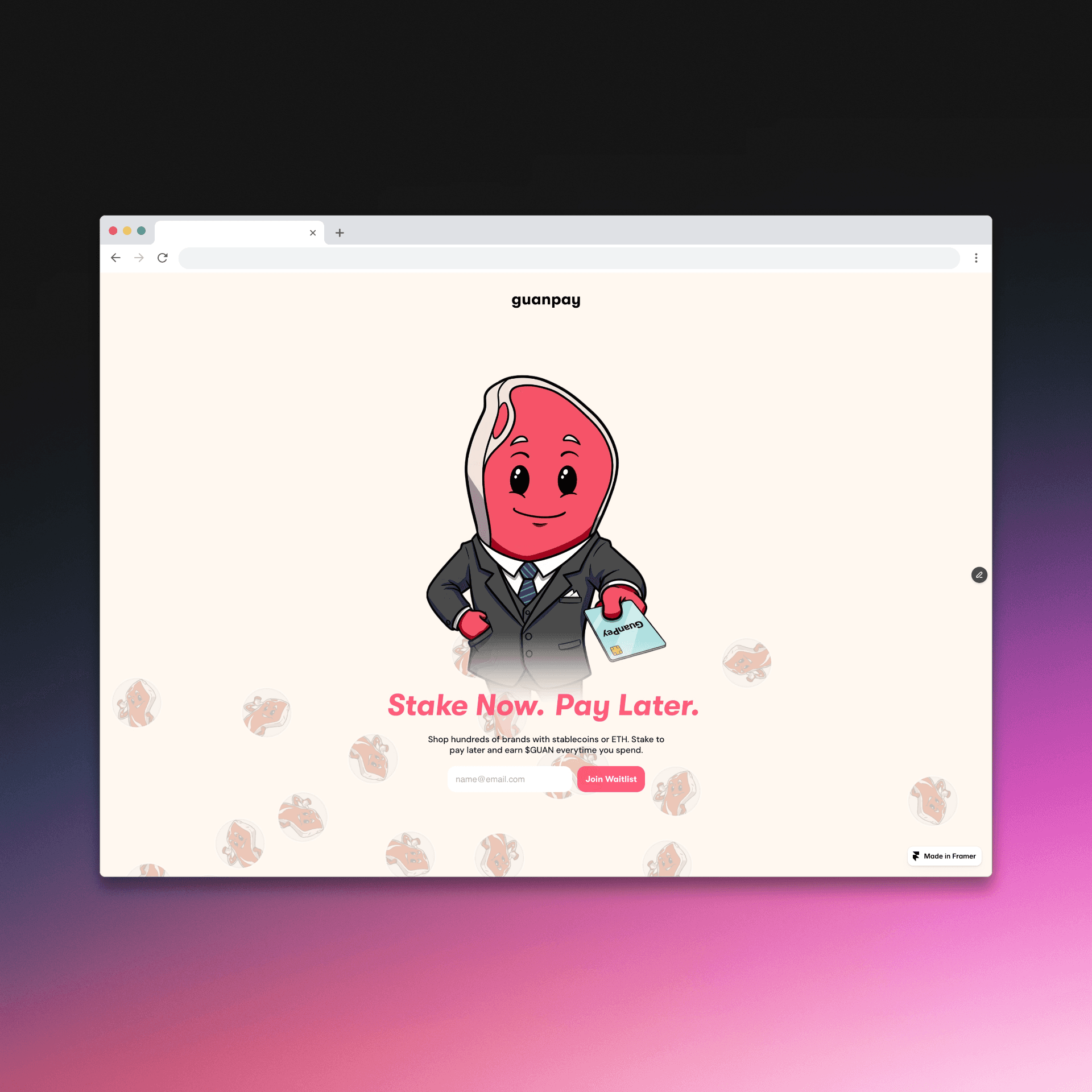
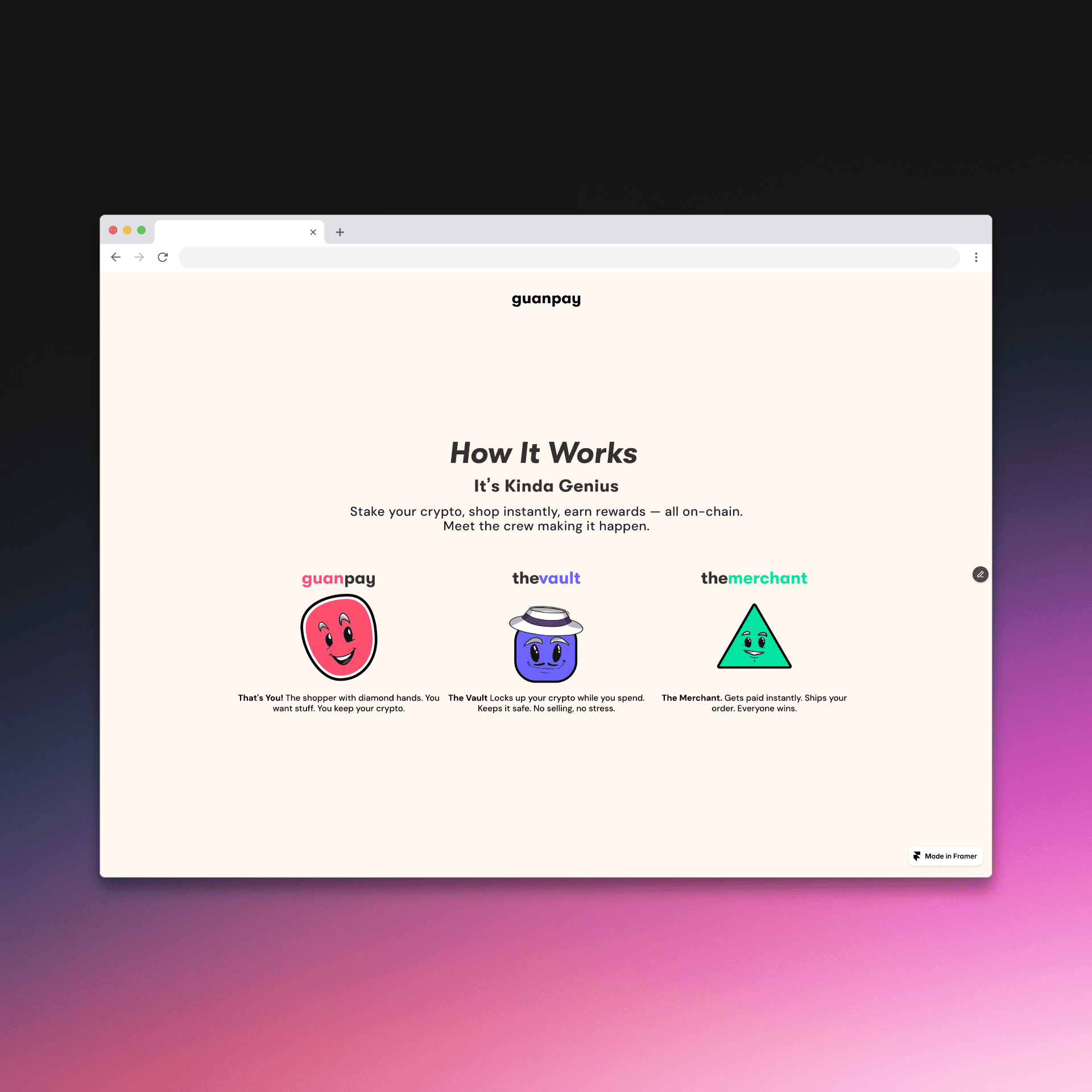
I created the full brand identity for GuanPay, including the design system, visual language, and three mascot characters - the GuanPay shopper, the Vault, and the Merchant - inspired by the personality-driven branding approach of neobanks like Up. Each character represents a role in the stake-to-own flow and gives the brand a playful, approachable tone that cuts against the typical DeFi aesthetic.
I designed and built the landing page in Framer, incorporating 3D models, character illustrations, and animated elements to communicate the product's value proposition before the platform itself existed. The page drives waitlist signups and explains stake-to-own mechanics in plain language.
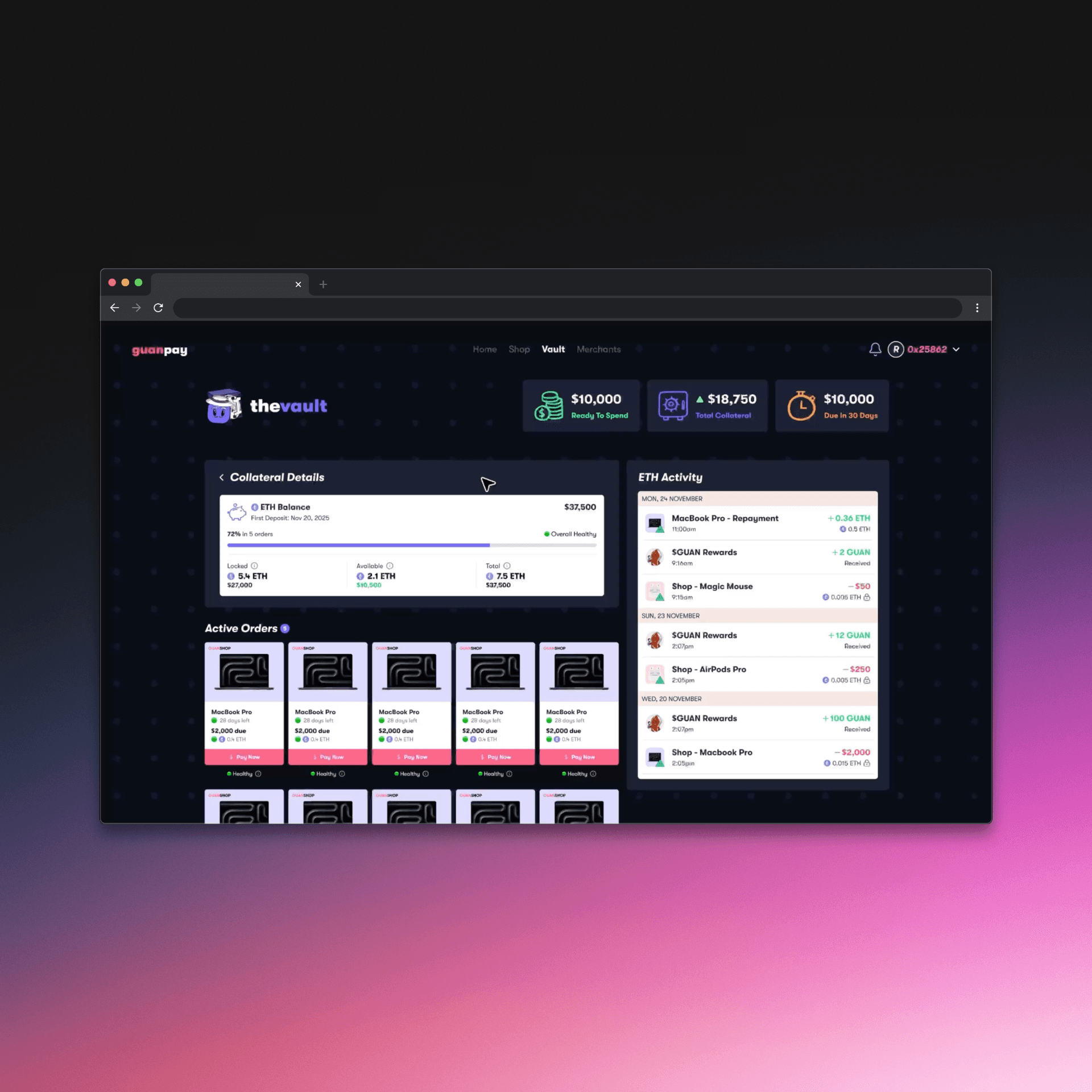
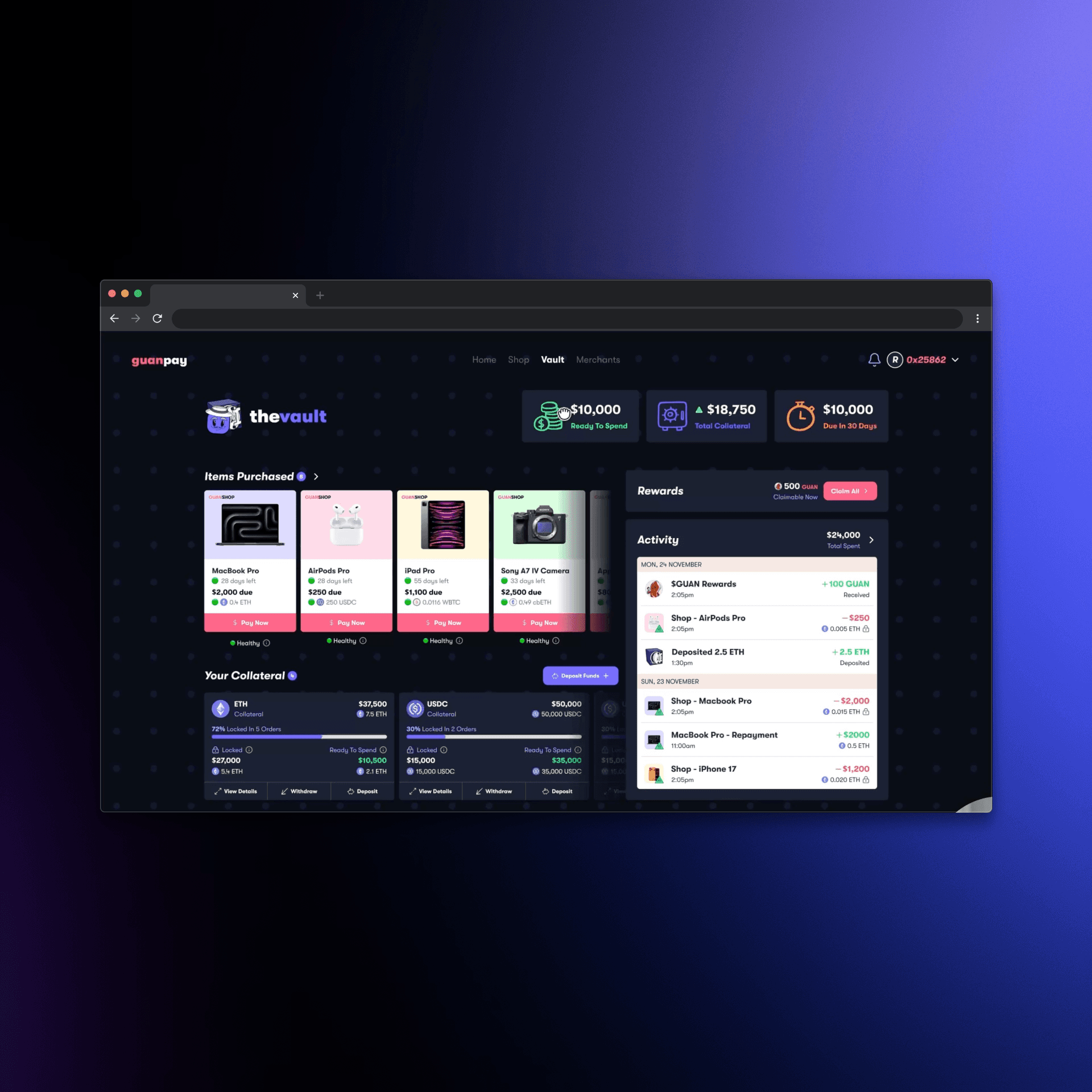
I designed the vault dashboard, which is the core of the user experience. Users manage collateral positions (called "stashes"), track health indicators like LTV ratio and liquidation risk, repay tabs, and withdraw unlocked assets. Each stash tracks its own debt allocation, rewards, and collateral breakdown across multiple asset types.
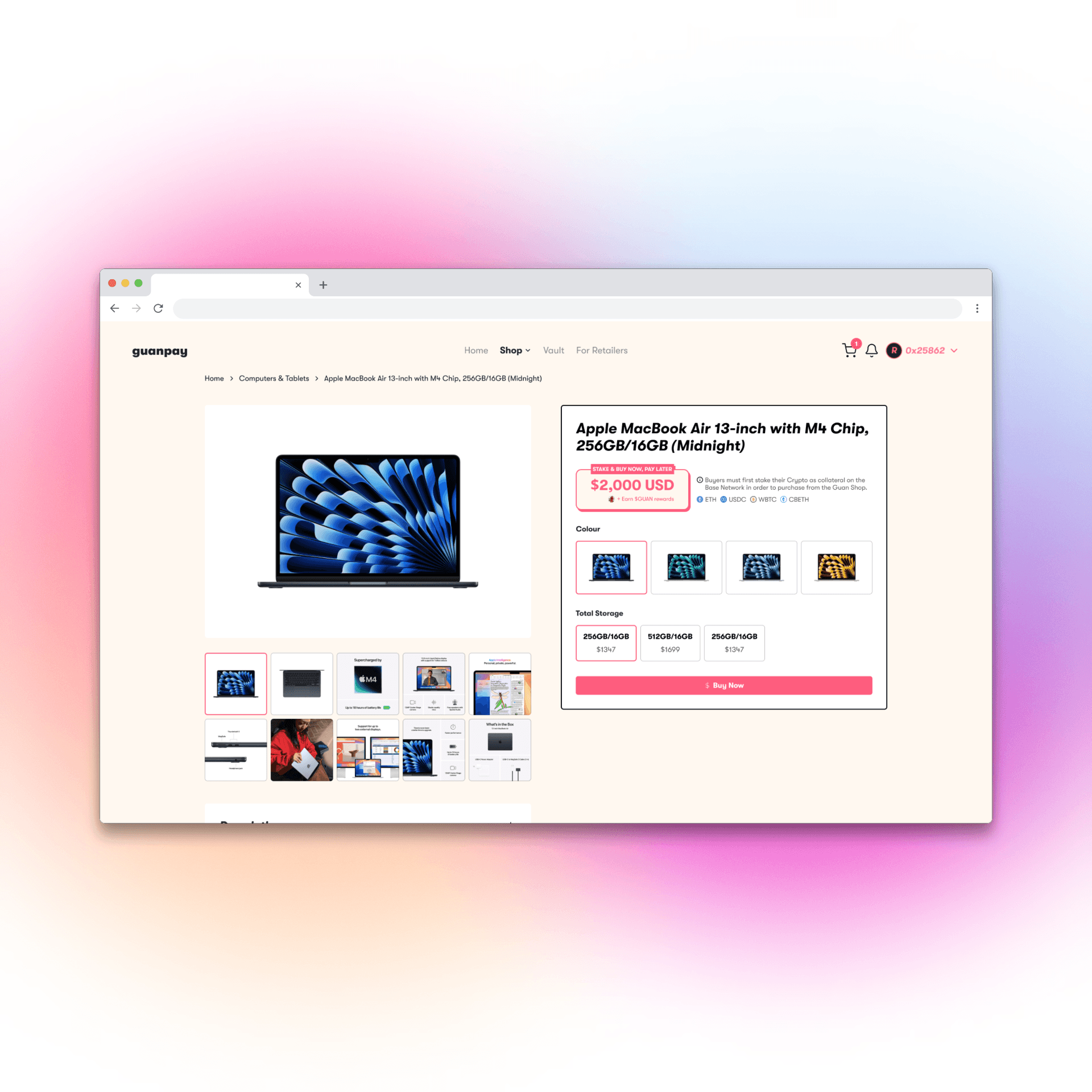
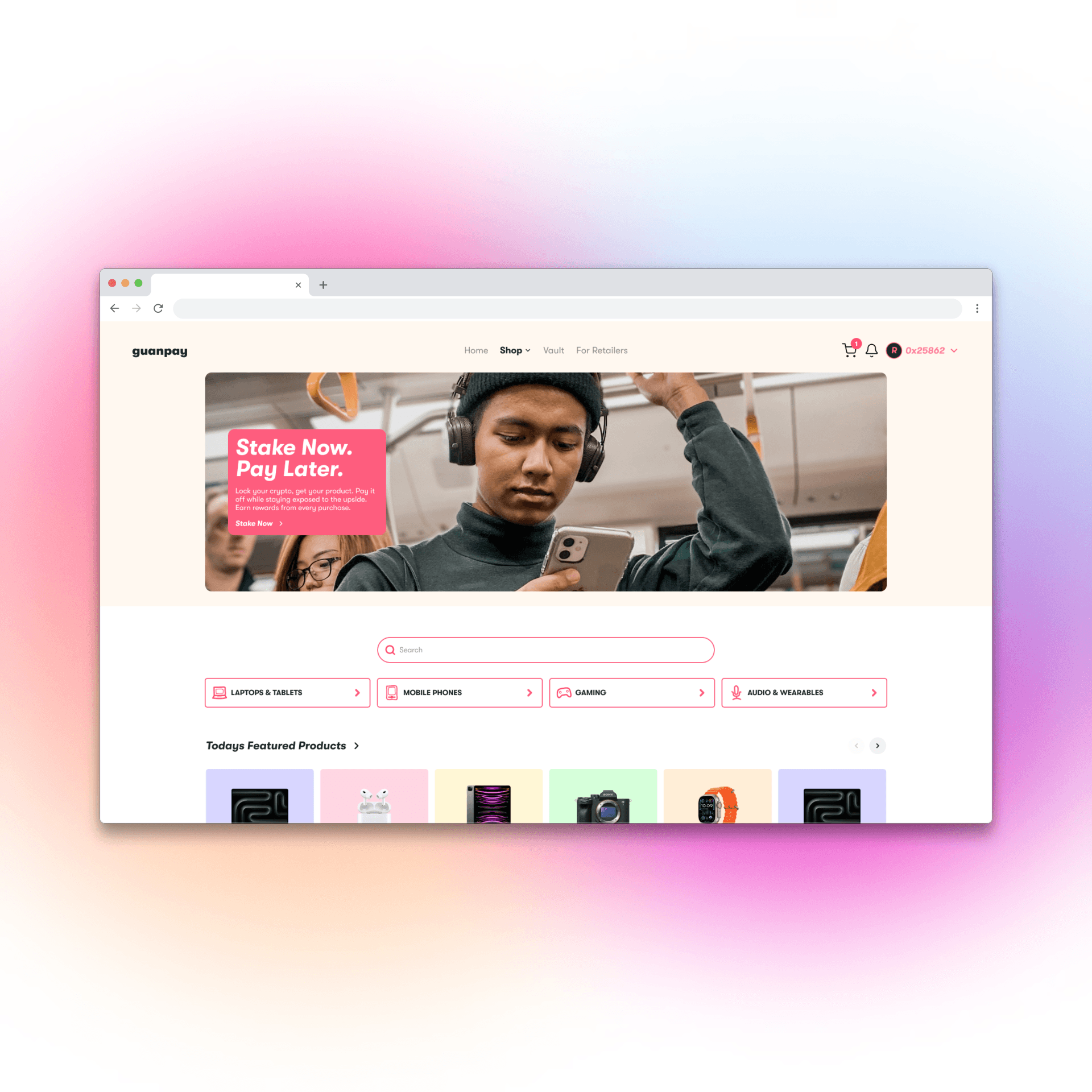
I designed the marketplace and checkout flows, including the stake-to-own purchase model where the protocol pays the merchant immediately while the user's collateral backs the debt. The checkout had to communicate unfamiliar mechanics (collateral locking, repayment windows, auto-settlement) without overwhelming first-time users.
I worked closely with the founder to resolve gaps between the whitepaper spec and the actual product model. The whitepaper described staking at the moment of purchase, but the build needed a pre-deposit model where users fund a vault first and shop later. I helped define the interaction model that made this work for both users and the protocol's smart contract architecture.
Outcome
GuanPay went from a whitepaper with a novel DeFi mechanic to a fully branded product with a clear identity and user model. The character-driven brand gives the protocol a distinct voice in a space full of generic DeFi interfaces, and the Framer landing page gave the team a live marketing presence while the product was still in development.
The vault dashboard gives users real-time visibility into their positions, risk levels, and spending power. The marketplace and checkout flows make a complex financial interaction feel approachable for crypto-native users who are used to DeFi but not used to buying physical goods through a protocol.
The design process also surfaced product questions that the whitepaper hadn't resolved, like how debt gets allocated across multiple stashes, whether partial payments are supported (they're not), and what happens at the 60-day auto-settlement window. These decisions got made during the design process rather than after development started.
Learnings
The biggest challenge was designing for a mental model that doesn't exist yet. Stake-to-own isn't a credit card, it isn't a DeFi lending position, and it isn't layaway. It borrows from all three. Every screen had to teach the user what was happening without turning the UI into a tutorial.
The branding work reinforced that DeFi products don't have to look like DeFi products. Giving each actor in the system a face and a personality made the mechanics easier to explain on the landing page and easier to reference in the product UI. It's a small thing, but "the Vault keeps your crypto safe" lands differently when there's a character attached to it. Working from a whitepaper also meant constantly testing assumptions.
The spec described one flow, the founder described another, and the smart contract constraints introduced a third. Design became the forcing function for getting alignment on how the product actually works, not just how it was described on paper.